
Private progress previews
I can provide a private web preview or suitable mobile test build so you can inspect agreed work before approving the next milestone or final payment.
Custom service
Polished Next.js websites and focused interfaces from £500, using reusable Magic UI components and Next.js's integrated server framework. This application can share a £6-per-month UK VPS with a mobile backend and local MySQL; larger builds are quoted to scope.
A focused Magic UI website can start from £500 because reusable components provide a strong visual foundation and Next.js supplies the frontend and server-side framework in one project. Its routing, server rendering, Route Handlers, and deployment conventions remove much of the separate API plumbing required by my React and Node.js service. I still design the finished frontend and engineer any required validation, security, business logic, and database access: AI can help me explore ideas and accelerate implementation, while I select, refine, and perfect the layout, visual hierarchy, typography, colour, responsive behaviour, and interactions. This application can run on a £6-per-month VPS from a UK provider alongside the Encrypted Messenger iOS backend and a local MySQL database. This is ideal for a polished website, landing experience, or focused interface. Larger dashboards, portals, SaaS products, accounts, payments, and custom backend features are quoted separately according to complexity, and heavier traffic or stronger availability requirements may need a larger server.
Preview and staged approval
I can provide secure previews throughout the agreed project so you can analyse progress, test important workflows, and request reasonable in-scope changes. The payment structure is agreed before work begins and reflects the size, risk, and engineering effort involved.
I can provide a private web preview or suitable mobile test build so you can inspect agreed work before approving the next milestone or final payment.
You can request reasonable revisions covered by the agreed scope at no extra charge before confirming that the build is right for you.
A focused lower-cost build may qualify for payment after preview. Complex custom applications require an agreed deposit or paid milestones before substantial engineering begins.
Focused websites or template-based builds may be eligible for approval and payment after a completed preview. Substantial React, React Native, Node.js, API, authentication, or MySQL projects require a deposit, paid discovery, or milestone payments because they consume significant engineering time, testing effort, infrastructure, and paid AI-development resources such as ChatGPT Codex usage. A complex completed application therefore cannot be declined without paying for work already approved and completed. New features outside the agreed scope are quoted separately. Source code, production credentials, final deployment, and third-party licences are transferred only after the final balance is paid.
Architecture and pricing
React is a user-interface library and does not automatically require a Node.js backend. For my custom React application service, however, I engineer a separate Node.js API whenever the product needs its own secure business logic, accounts, permissions, integrations, or MySQL data. That gives more explicit, lower-level control, but it also means building and operating two connected application layers instead of one integrated Next.js project. That custom API work takes additional engineering time and a lower-level understanding of HTTP, security, data contracts, processes, deployment, and failure handling.
A separate React and Node.js architecture is not universally better. It is valuable when several clients need the same stable API, when frontend and backend releases must remain independent, or when the backend requires its own scaling and security boundary. For a focused website, store, or portal, Next.js can be the more efficient professional architecture. If a Next.js project needs substantial custom backend engineering, that work is still priced according to its complexity. AI can accelerate implementation in either architecture, but it does not replace architecture decisions, security review, testing, or production responsibility.
Why this service can start from £500
Magic UI provides reusable React components, blocks, and templates for polished landing pages and user-facing interfaces. Using an established component foundation means I do not need to charge for recreating every decorative card, animation, button, background, and marketing section from the beginning. That makes a focused Next.js website faster and less expensive to produce than a completely bespoke interface.
Magic UI supplies visual building blocks; it does not design the final application or provide its business logic. I remain responsible for the page structure, branding, component selection and customisation, responsive behaviour, accessibility, and performance. AI can help me explore design directions and implement a strong starting point, but I personally review and perfect the visual hierarchy, spacing, typography, colour, interactions, and device-specific details. Where the project needs application features, I also engineer the Next.js server routes or separate Node.js API, validation, authentication, permissions, MySQL schema and queries, Stripe or email integrations, testing, and production deployment. Those requirements are quoted according to their real scope.
Magic UI is a third-party product. Availability, pricing, features, and licence terms are controlled by its publisher and should be checked before purchase.
Honest performance guidance
Next.js itself can be fast, but animation-heavy Magic UI components, large templates, WebGL effects, blur layers, and excessive client-side JavaScript may feel slow or less smooth on older phones and computers. I will explain this trade-off before recommending a design.
Faster alternatives when animation is not essential
A lighter custom React build or standard HTML/CSS website is often a better option when maximum smoothness, accessibility, and support for older hardware are more important than complex animation.
A directly engineered React interface backed by a custom Node.js API and MySQL database may look more restrained than an animation-led template, but that can feel more professional for dashboards, portals, stores, and operational applications. Fewer decorative effects and third-party visual layers can mean more predictable controls, clearer feedback, easier maintenance, and fewer distracting hover, scrolling, stacking, or low-powered-device glitches. Performance still depends on careful architecture, implementation, and testing rather than the technology names alone.
Custom admin dashboards
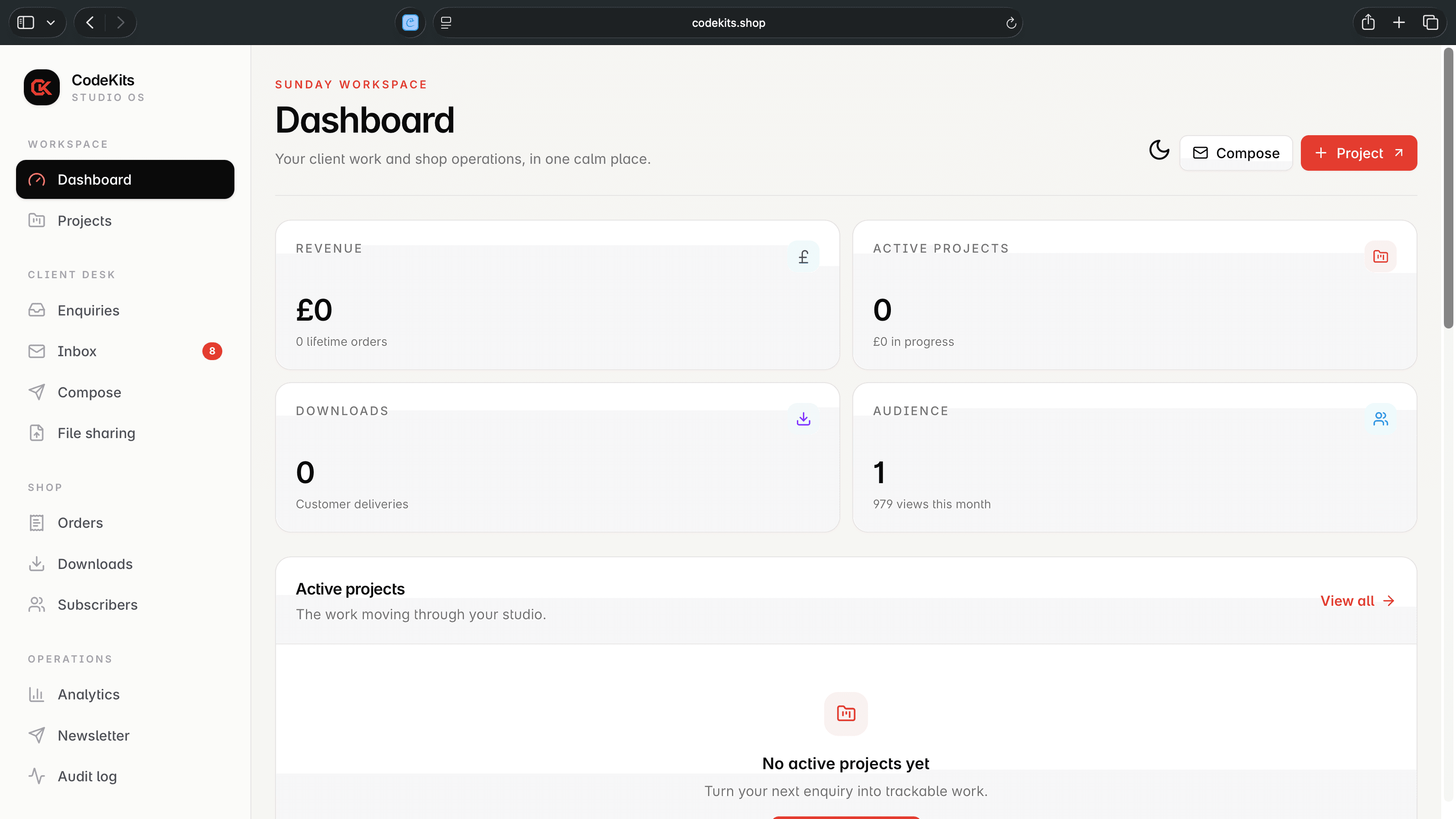
I can design and build private admin areas for ecommerce stores, social platforms, SaaS products, React Native mobile-app backends, customer portals, and other data-driven applications. Each dashboard can be tailored to the project's database, APIs, staff roles, and everyday workflows.
Continued support included
Support continues after handover, with practical help related to the delivered projectrather than leaving you with code and no direction.
Get clear follow-up answers about the supplied code, setup documentation, configuration, and technical handover.
Request practical command sheets for installation, deployment, server configuration, updates, and common troubleshooting.
Receive structured next-step plans covering architecture, milestones, integrations, security work, testing, and launch preparation.
Included support covers reasonable questions and guidance connected to the purchased product or agreed project scope. New features, substantial redevelopment, managed hosting, and third-party charges are quoted separately.
Next.js and Magic UI workflow
This Next.js and Magic UI application can run on the same £6-per-month UK VPS as the Encrypted Messenger iOS backend and local MySQL database. The workflow includes its production build, PM2 process and Nginx proxy validation.
Final command sheets are tailored to the project and hosting setup.
✓ Ubuntu packages updated✓ Magic UI component added✓ Next.js production build completed✓ Application saved in PM2✓ Nginx proxy checked and reloadedProject inquiry
Tell me what you want to build, what budget range you have, and when you want to launch. I will reply with scope questions and a custom quote.